Rebuildr
Old bricks, new creations.
After the first build
A finished set can sit untouched for years. Taking it apart feels risky when you do not know what to make next. Rebuildr helps you imagine what these same pieces can become.
I’m building the tool with a CS friend, bringing my years of LEGO play into a project for children and families.
Working with what’s there
Users can photograph bricks, enter a set number, or add individual pieces to assemble an inventory. The platform uses that inventory to help generate new building ideas and instructions.
I lead product and community work. My collaborator leads the technical model development. The prototype is still being refined, particularly in modeling user intent, physical stability, and how effectively it uses a user’s available bricks—without relying on either too few or nearly all of them. A feedback system was added to save user inputs, generated builds, and positive or negative ratings, creating training data to improve future recommendations.
Five schools, real feedback
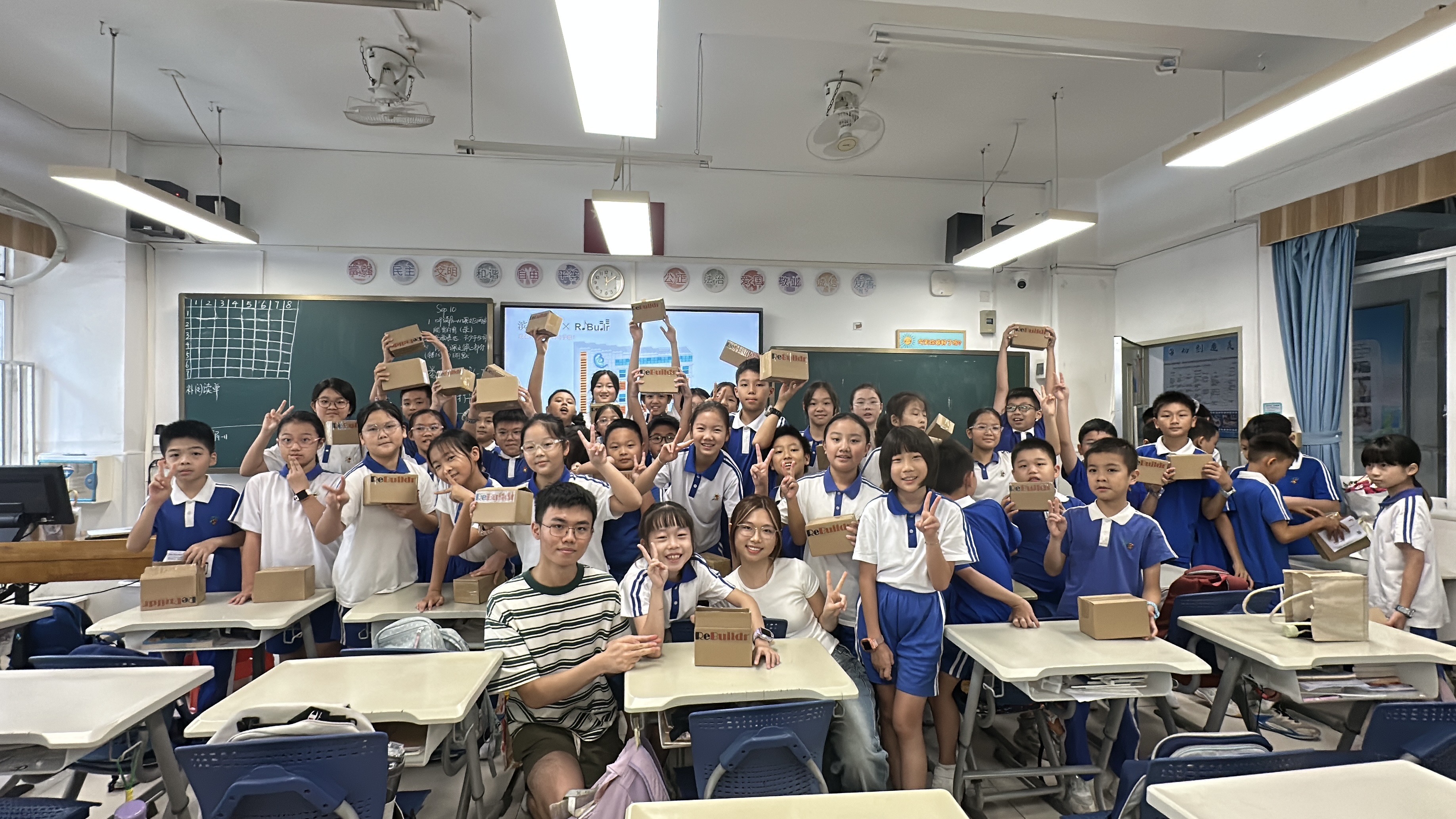
At workshops across five schools, we introduced AI, invited children to try our prototype, and asked families to donate unused bricks. The sessions gave us opportunities to observe how children used the tool and collect input for improving the model.
Children’s questions and hands-on testing help us see where the prototype still needs work.
Bricks in circulation
We have recirculated 100+ kg of bricks from Shenzhen schools and community to rural schools in Heyuan. Donation and exchange are part of the same idea as the tool: more play from resources that already exist.
What we’re refining
Prototype testing feeds back into piece recognition and the next round of model development.